
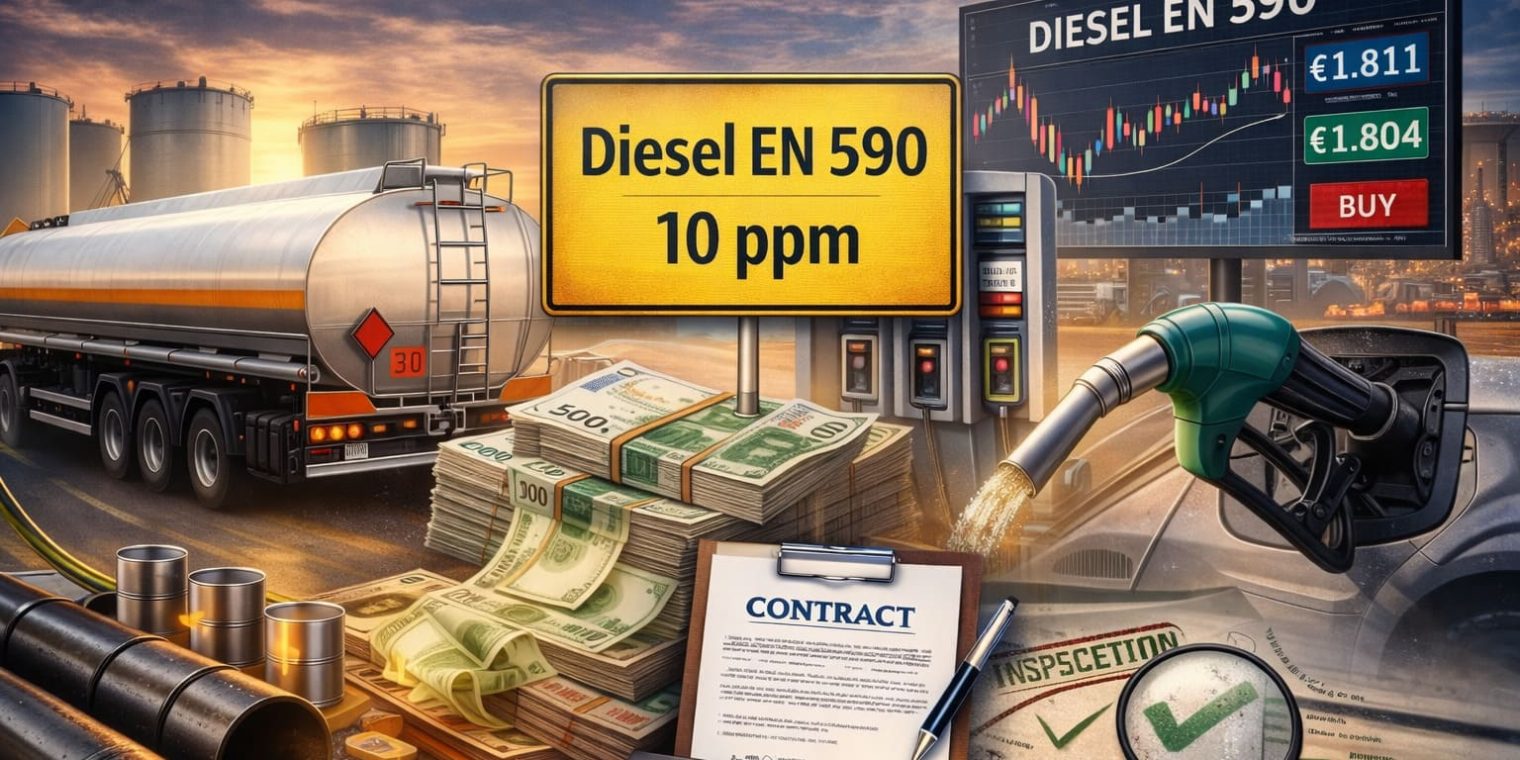
Diesel EN 590 (10 ppm) is the global benchmark for ultra-low sulfur diesel used in modern road transportation, industrial fleets, and power generation systems. It complies with strict European emissions standards and is designed for high-performance engines operating under Euro 5 and Euro 6 regulations.
As environmental regulations tighten worldwide, EN 590 diesel has become the preferred fuel grade for both developed and emerging markets seeking cleaner, more efficient energy solutions.
What Is Diesel EN 590?
EN 590 is a European diesel fuel standard that defines the physical, chemical, and performance requirements for automotive diesel. The “10 ppm” designation refers to the maximum allowable sulfur content of 10 parts per million, which significantly reduces harmful emissions and extends engine lifespan.
Key quality parameters include:
-
Sulfur content ≤ 10 ppm
-
Cetane number ≥ 51
-
Density at 15°C: 820–845 kg/m³
-
Flash point ≥ 55°C
-
Distillation and viscosity limits
-
Cold flow properties adapted to climate zones
These properties ensure smooth combustion, improved fuel efficiency, and lower particulate emissions.
Why Ultra-Low Sulfur Diesel Matters
Ultra-low sulfur diesel plays a critical role in reducing air pollution and meeting global environmental targets. Lower sulfur content minimizes the formation of sulfur dioxide and particulate matter, which are major contributors to respiratory illness and urban smog.
Additionally, EN 590 diesel is fully compatible with modern exhaust after-treatment systems such as diesel particulate filters (DPFs) and selective catalytic reduction (SCR) units. Using high-sulfur fuels in these engines can cause severe mechanical damage and void manufacturer warranties.
For fleet operators and industrial buyers, switching to EN 590 diesel results in:
-
Lower maintenance costs
-
Improved engine longevity
-
Reduced fuel consumption
-
Compliance with regulatory standards
-
Enhanced resale value of vehicles and equipment
Applications of Diesel EN 590
Diesel EN 590 is widely used across multiple sectors, including:
-
Road transportation (cars, trucks, buses)
-
Mining and construction equipment
-
Power generators and backup systems
-
Agricultural machinery
-
Marine auxiliary engines
-
Government and municipal fleets
Its versatility and consistent performance make it suitable for both commercial and industrial operations worldwide.
How Diesel EN 590 Is Traded Globally
EN 590 diesel is traded in both spot and long-term contract markets. Prices are typically benchmarked against regional fuel indices such as Platts or Argus, with premiums or discounts applied based on delivery location, volume, and logistics complexity.
Bulk deliveries are conducted under standardized Incoterms such as:
-
FOB (Free on Board)
-
CIF (Cost, Insurance, and Freight)
-
DAP (Delivered at Place)
Each transaction includes strict quality inspection procedures conducted by independent testing agencies to verify sulfur content, density, and cetane levels before shipment.
Storage and Handling Considerations
Diesel EN 590 must be stored in clean, water-free tanks to prevent microbial contamination and fuel degradation. Proper filtration and temperature control are essential to maintain cold flow properties in colder climates.
Buyers should ensure that their storage facilities meet international safety and environmental regulations to avoid losses and compliance issues.
How ODAS Petroleum Supplies Diesel EN 590
ODAS Petroleum supplies high-quality Diesel EN 590 (10 ppm) to clients worldwide, supported by certified refineries and robust logistics networks. Our trading team manages the full transaction cycle, from sourcing and contracting to inspection coordination and shipment tracking.
We offer both spot and long-term supply solutions tailored to client requirements, ensuring competitive pricing and consistent fuel quality.
Contact ODAS Petroleum today to request pricing and availability for Diesel EN 590 (10 ppm).